
Maintaining your vehicle goes far beyond oil changes and tire rotations. One of the most overlooked yet critically important maintenance tasks is replacing the cabin air filter. If you have been searching for how to change cabin air filter, this comprehensive guide covers everything you need: what the filter does, where it sits, how to tell when it needs replacing, what the replacement costs, and a detailed step-by-step walkthrough that any driver can follow at home.
A clean, functioning filter improves air quality inside your vehicle, protects your entire HVAC system from premature wear, and ensures every drive is as comfortable as possible. By the end of this guide, you will know exactly how to change cabin air filter safely, quickly, and correctly. Let’s dive straight in.
What Is a Cabin Air Filter?
Before you attempt any replacement work, it helps to understand what is a cabin air filter and why it matters so much to your vehicle’s performance.
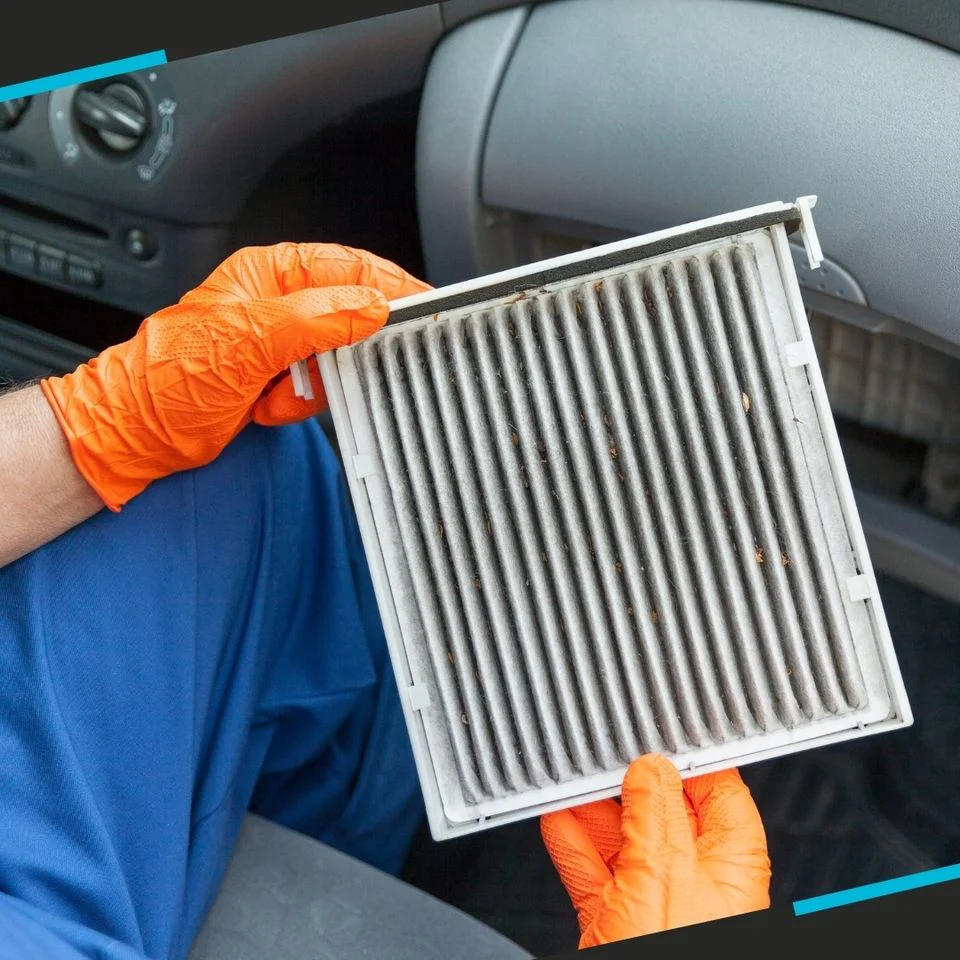
A cabin air filter is a small pleated filtration component installed inside your vehicle’s heating, ventilation, and air conditioning (HVAC) system. Every time you switch on the fan, air is drawn through this filter before it enters the passenger compartment. The filter physically traps airborne contaminants so that only clean, filtered air reaches you and your passengers.
Common particles that a cabin air filter captures include:
- Dust and fine road grit
- Pollen and mold spores
- Smog particles and exhaust fumes
- Bacteria and micro-allergens
- Insects and larger road debris
Without a functioning filter, all of these contaminants would flow freely through your vents and directly into the air you breathe during every journey. Over time, a saturated or damaged filter stops performing and the problem compounds which is exactly why routine replacement is essential.
Cabin Air Filter Purpose: Why It
Matters More Than You Think
The cabin air filter purpose extends well beyond simply filtering dust. It plays a multi-layered role in both the comfort and mechanical health of your vehicle.
1. Delivering Clean Interior Air
Its most obvious job is ensuring the air circulating inside your car is free from harmful particles. Particularly on highway drives or in congested urban traffic, the volume of pollutants outside the vehicle is significant. The filter acts as the first and last line of defense.
2. Protecting Allergy and Asthma Sufferers
For drivers who suffer from seasonal allergies, asthma, or other respiratory conditions, a fresh filter can make a dramatic difference. A clogged or degraded filter allows allergens to pass through unchecked, triggering symptoms mid-drive.
3. Shielding the HVAC System from Debris
The filter also protects sensitive mechanical components particularly the blower motor and evaporator coil from debris accumulation. Dirt lodged in these components leads to expensive repairs over time.
4. Odor Reduction
Many premium filters use an activated carbon layer specifically designed to absorb exhaust fumes, industrial smells, and general road odors. This keeps the cabin environment fresh regardless of external conditions.
5. Maintaining Optimal Airflow
A clean filter allows air to move freely at the volume your fan setting demands. A blocked filter forces the blower motor to work harder, reducing airflow efficiency and increasing wear on the motor itself.
AC Air Filter Car: Where Is It Located in Your Vehicle?
When drivers search for information about the ac air filter car, the first practical question is usually location because you cannot replace what you cannot find.
In the vast majority of passenger vehicles sold in the United States, the cabin air filter is found in one of three places:
- Behind the glove compartment (most common location in modern vehicles)
- Beneath the dashboard on the passenger side
- Under the hood near the base of the windshield, inside the fresh air intake
The exact location depends entirely on your vehicle’s make, model, and year. A Toyota Camry, a Ford F-150, and a Honda Civic all have their filters in slightly different positions. Before starting the replacement process, consult your owner’s manual — it will contain a diagram showing the precise location and any vehicle-specific instructions for access.
If you no longer have the physical manual, the manufacturer’s official website or a quick online search using your vehicle’s year, make, and model will point you in the right direction.
How Often to Change Cabin Air Filter: The General Rule
A question nearly every vehicle owner asks at some point is: how often to change cabin air filter? The answer depends on a combination of manufacturer recommendations and real-world driving conditions.
The industry-standard recommendation from most vehicle manufacturers is:
- Every 12,000 to 15,000 miles, OR
- Once every 12 months whichever comes first
However, these are baseline figures for average driving conditions. Your actual interval may need to be shorter depending on:
- Driving primarily in high-density urban areas with heavy traffic
- Living or commuting through regions with high pollen counts
- Frequent driving on unpaved or dusty rural roads
- Operating the vehicle in areas with significant industrial air pollution
- Using the vehicle for commercial purposes with frequent passenger loads
If you regularly drive in cities like Los Angeles, Phoenix, Houston, or New York — where smog, fine particulates, and pollen counts are consistently elevated — plan on inspecting your filter every 6,000 to 8,000 miles rather than waiting for the standard interval.
Cabin Air Filter Replacement Interval: What Manufacturers Say
While the general guideline above applies to most drivers, the official cabin air filter replacement interval varies by manufacturer and is specified in your vehicle’s service schedule.
Here is a general reference table based on driving conditions:
Driving Condition | Recommended Interval | Inspection Frequency |
Normal / Light suburban | 12 months or 15,000 miles | Annually |
Moderate urban traffic | 9–10 months or 12,000 miles | Every 6 months |
Severe / High dust or pollution | 6–8 months or 8,000 miles | Every oil change |
The smartest habit is to check the filter at every oil change visit. Most service centers will inspect it for free, and since the car is already in for maintenance, replacement takes only a few extra minutes if needed.
When to Replace Cabin Air Filter: Symptom-Based Triggers
Mileage alone should not be your only trigger. Knowing when to replace cabin air filter based on observable symptoms allows you to act before problems escalate.
Replace the filter immediately if you notice any of the following:
- Noticeably reduced airflow from vents even at maximum fan speed
- Persistent musty, moldy, or unpleasant odors when the HVAC is running
- A significant increase in interior dust accumulation on surfaces and dashboards
- Unusual whistling or rattling sounds from the vent area
- Windows that fog up quickly and clear much more slowly than usual
- An increase in allergy or respiratory symptoms during drives
Even if your mileage hasn’t reached the recommended threshold, these warning signs are strong indicators that your filter has reached its functional limit. Environmental factors can clog a filter well ahead of schedule, especially after events like heavy pollen seasons, dust storms, or wildfire smoke exposure all of which are increasingly common in parts of the U.S.
Bad Cabin Air Filter Symptoms: Recognizing the Warning Signs Early
Understanding bad cabin air filter symptoms gives you an early warning system that helps you avoid both discomfort and costly HVAC repairs down the line.
Here are the most frequently reported symptoms in order of how noticeable they typically become:
Weak or Restricted Airflow
This is usually the first sign. When a filter becomes heavily clogged, it physically restricts the volume of air that can pass through, regardless of how high you set the fan. Many drivers initially assume the blower motor is failing — when in reality, a $20 filter replacement solves the problem entirely.
Musty or Moldy Odors
A dirty filter saturated with moisture and organic debris becomes a breeding ground for mold and bacteria. The result is an unpleasant smell that fills the cabin every time the HVAC is activated.
Increased Allergy Flare-Ups
If you or your passengers start experiencing more frequent sneezing, eye irritation, or respiratory discomfort specifically during drives, a degraded filter is a likely culprit.
Reduced AC and Heating Performance
Restricted airflow directly reduces your system’s ability to cool or heat the cabin efficiently. The AC compressor and heating core are delivering full capacity, but the filter bottleneck prevents conditioned air from reaching the passenger space effectively.
Noisy Fan Operation
A severely clogged filter can cause the blower motor to strain audibly producing a louder-than-normal hum or vibration as it works against the blockage.
Signs of a Dirty Cabin Air Filter: What to Look For During Inspection
Many of the warning signs are performance-based, but there are also direct visual signs of a dirty cabin air filter that you can check yourself in just a few minutes.
Visual Inspection Indicators
- The filter surface appears dark grey, brown, or black rather than its original white or cream color
- Visible debris leaves, insects, or compacted dirt is trapped in the filter pleats
- The pleats appear compressed or matted together, indicating the filter is saturated
- Any visible mold growth or discoloration beyond standard dirt accumulation
Performance Indicators During Inspection
- Hold the filter up to a light source — very little light passing through means severe blockage
- Tap the filter gently over a trash can; excessive dust and debris falling out confirms heavy soiling
A new filter is generally white or cream-colored with well-defined, open pleats. If your current filter looks significantly darker and more compacted, it is time for a replacement regardless of mileage.
How to Change Cabin Air Filter: Complete Step-by-Step Instructions
Now for the core of this guide. Here is exactly how to change cabin air filter in a standard passenger vehicle, using the most common glove box access method. This process applies to the majority of U.S. market vehicles including most Toyota, Honda, Nissan, Ford, Chevrolet, and Hyundai models.
What You Will Need
- Replacement cabin air filter (correct part number for your vehicle)
- Clean cloth or vacuum (optional, for cleaning the housing)
- Your owner’s manual or a reference guide for your vehicle
Step 1: Turn Off the Vehicle
Switch the engine off and make sure the HVAC system is completely off. This prevents debris from being drawn into the system during the swap.
Step 2: Open and Empty the Glove Box
Remove any items stored in the glove box. You need clear access to the interior.
Step 3: Release the Limiting Tabs
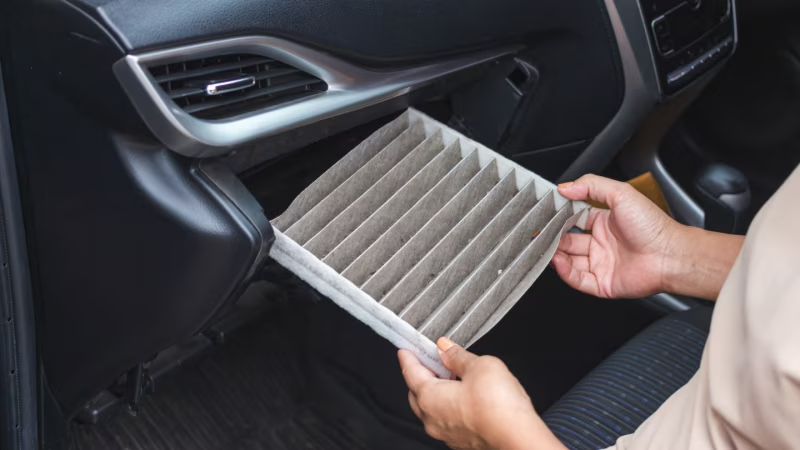
On the sides of the glove box, you will find small tabs or stops that limit how far the box swings down. Squeeze or push these inward while lowering the glove box fully so that it drops down and out of the way, revealing the filter housing behind it.
Step 4: Locate and Open the Filter Housing
You will see a rectangular plastic housing. Unclip or slide open the access panel. In some vehicles, this requires pressing two side clips simultaneously.
Step 5: Remove the Old Filter
Slide the old filter out carefully. Pay attention to the direction of the airflow arrow printed on the filter’s frame you will need to replicate this orientation with the new filter. Dispose of the old filter in a sealed bag to contain trapped dust and debris.
Step 6: Clean the Housing (Optional but Recommended)
Use a dry cloth or a low-power vacuum to remove any loose debris from inside the filter housing before inserting the new unit. This prevents contamination of your brand-new filter.
Step 7: Install the New Filter
Slide the replacement filter into the housing with the airflow arrow pointing in the correct direction (typically toward the blower motor). Make sure it seats flat and flush without any gaps around the edges.
Step 8: Close the Housing and Reassemble
Clip the access panel back into place. Swing the glove box back up and re-engage the limiting tabs. Return any items to the glove box.
Step 9: Test the System
Start the vehicle and run the fan at various speeds. Airflow should feel noticeably stronger and cleaner if the old filter was significantly clogged. Check for any unusual sounds that might indicate the filter is not seated correctly.
Total time required: 10 to 20 minutes for most vehicles. No specialist tools are needed. This is one of the simplest and most rewarding DIY maintenance tasks available to vehicle owners.
Cabin Air Filter Replacement Cost: DIY vs. Professional Service
Understanding cabin air filter replacement cost helps you make an informed decision about whether to handle the job yourself or take it to a service center.
Service Option | Estimated Cost | Time Required |
DIY replacement (filter only) | $15 – $60 | 10–20 minutes |
Dealership service | $60 – $120 | Included in service visit |
Independent auto shop | $45 – $90 | 15–30 minutes |
The labor markup charged by dealerships and service centers is significant given how straightforward the replacement process is. For most drivers comfortable with basic vehicle maintenance, purchasing the filter and handling it yourself provides excellent value.
How Much Does a Cabin Air Filter Cost? A Complete Price Breakdown
If you are buying the part yourself, how much does a cabin air filter cost depends primarily on the filter type and brand you choose.
Filter Types and Price Ranges
- Basic paper/particulate filter: $10 – $25. Suitable for most drivers in average conditions. Captures dust, pollen, and debris effectively.
- Activated carbon filter: $25 – $45. Adds an odor-absorbing carbon layer. Recommended for urban drivers or those sensitive to exhaust smells.
- Premium HEPA-grade filter: $40 – $65. Highest filtration efficiency. Captures the smallest particles and is ideal for allergy sufferers.
- OEM (Original Equipment Manufacturer) filter: $30 – $80. Guaranteed fit and performance but typically carries a brand premium over equivalent aftermarket options.
For most everyday drivers, a quality activated carbon filter in the $25 – $40 range represents the best balance of performance and cost. Purchasing from major retailers such as AutoZone, O’Reilly Auto Parts, Amazon, or Walmart typically provides the most competitive pricing.
Cabin Air Filter Price: Why Costs Vary Between Products
The cabin air filter price you encounter can vary quite significantly even for the same vehicle. Here is what drives those differences:
Filter Material and Technology
Basic paper filters cost the least because they use standard filtration media. Activated carbon filters incorporate an additional manufacturing step and materials. HEPA-grade filters use denser, more precisely engineered media driving the price higher.
OEM vs. Aftermarket
OEM filters are produced by or for the vehicle manufacturer and carry a brand premium. Reputable aftermarket brands like Fram, Bosch, K&N, and Purolator often provide equivalent or superior performance at a lower price point.
Vehicle Type
Luxury and European vehicle brands frequently have larger, more complex filter assemblies that cost more to produce. A filter for a BMW 5 Series or Mercedes-Benz E-Class will generally cost more than one for a Toyota Corolla or Honda Accord.
Retailer and Purchase Channel
Dealership parts departments typically charge more than aftermarket retailers. Online marketplaces and auto parts chain stores often offer the same quality at a meaningful discount.
The Broader Benefits of Staying on Schedule
Knowing how to change cabin air filter is only one part of the equation. Equally important is understanding why staying consistent with this maintenance task delivers compounding benefits over the life of your vehicle.
- Improved air conditioning and heating efficiency — your system achieves target temperatures faster
- Extended blower motor lifespan — no longer straining against a blocked filter
- Better fuel efficiency — a reduced electrical load from the blower motor contributes marginally to fuel economy
- Enhanced resale value — comprehensive maintenance records demonstrate responsible ownership
- Year-round comfort — clean filtered air regardless of season, weather, or driving environment
The cost of a single filter replacement — typically $15 to $60 for a DIY job — is trivial compared to the cost of replacing a failed blower motor ($200 – $600+) or addressing chronic respiratory issues caused by consistently poor cabin air quality.
How to Choose the Right Replacement Filter for Your Vehicle
Not all filters are interchangeable. When purchasing a replacement as part of learning how to change cabin air filter properly, always confirm compatibility using one of these methods:
- Enter your vehicle’s year, make, model, and engine size into the retailer’s online parts finder
- Check the part number printed on your existing filter before disposal
- Consult your owner’s manual for the OEM part number
- Ask a parts store associate to cross-reference the correct filter for your specific vehicle
Installing the wrong filter one that is too small, too large, or incorrectly shaped will leave gaps in the housing and allow unfiltered air to bypass the filtration system entirely, defeating the purpose of the replacement.
Cabin Air Filter vs. Engine Air Filter: Know the Difference
Many drivers confuse these two components. While both are filters that require periodic replacement, they serve completely different functions:
Feature | Cabin Air Filter | Engine Air Filter |
Filters air for… | Passenger compartment | Engine combustion chamber |
Located… | Inside HVAC / dashboard area | Engine bay air intake |
Replacement interval | 12,000–15,000 miles | 15,000–30,000 miles |
Impact of neglect | Poor air quality, HVAC damage | Reduced engine performance |
When you take your vehicle in for service, confirm that both filters have been inspected. Replacing only one while neglecting the other leaves a maintenance gap.
Frequently Asked Questions
Can I drive with a clogged cabin air filter?
Yes, a clogged filter will not prevent the vehicle from driving. However, it will progressively worsen air quality inside the cabin, reduce HVAC efficiency, and place additional strain on your blower motor. It is never advisable to leave a severely clogged filter in place for extended periods.
Can I clean and reuse a cabin air filter?
Some reusable filters — typically those made with washable synthetic media — can be cleaned and reinstalled. Standard paper or carbon filters are not designed to be washed and should be replaced when dirty. Attempting to clean a disposable filter generally damages the filtration media and reduces its effectiveness.
Does a new cabin air filter improve AC performance?
Yes. If your current filter is significantly clogged, installing a fresh replacement will immediately restore proper airflow volume. This is one of the key reasons drivers want to learn how to change cabin air filter themselves — the performance improvement after replacement is often immediately noticeable.
How do I know if my car has a cabin air filter?
Most vehicles manufactured after the year 2000 are equipped with a cabin air filter. Check your owner’s manual under the maintenance schedule section. If no cabin air filter is listed, your vehicle may route outside air without filtration — though this is increasingly rare in modern models.
What happens if I install the filter backwards?
Installing the filter with the airflow arrow pointing in the wrong direction significantly reduces filtration effectiveness. The filter’s pleats are engineered to catch particles from a specific direction. Always match the airflow arrow to the direction indicated in the housing or owner’s manual before closing the access panel.
Final Thoughts
If you have read through this guide, you now have a complete, practical understanding of how to change cabin air filter at home along with everything you need to know about timing, cost, filter selection, and warning signs.
This is genuinely one of the most accessible maintenance tasks available to vehicle owners. It requires no specialist tools, takes under 20 minutes, and delivers immediate, tangible improvements to both air quality and HVAC performance. The financial case is equally compelling: a $20 filter every 12 months prevents far more expensive repairs and keeps every drive comfortable for you and your passengers.
Add cabin air filter inspection to your annual maintenance checklist, stay alert to the warning signs covered in this guide, and you will maintain a cleaner, healthier, and more efficient driving environment year-round. Whether you drive a compact sedan in Chicago or a full-size truck in Texas, this small component plays an outsized role in your daily driving experience.
Take ten minutes this weekend your lungs will thank you.
Leave a comment
Your email address will not be published. Required fields are marked *